70% of Users Never Scroll. Here’s What to Do About It
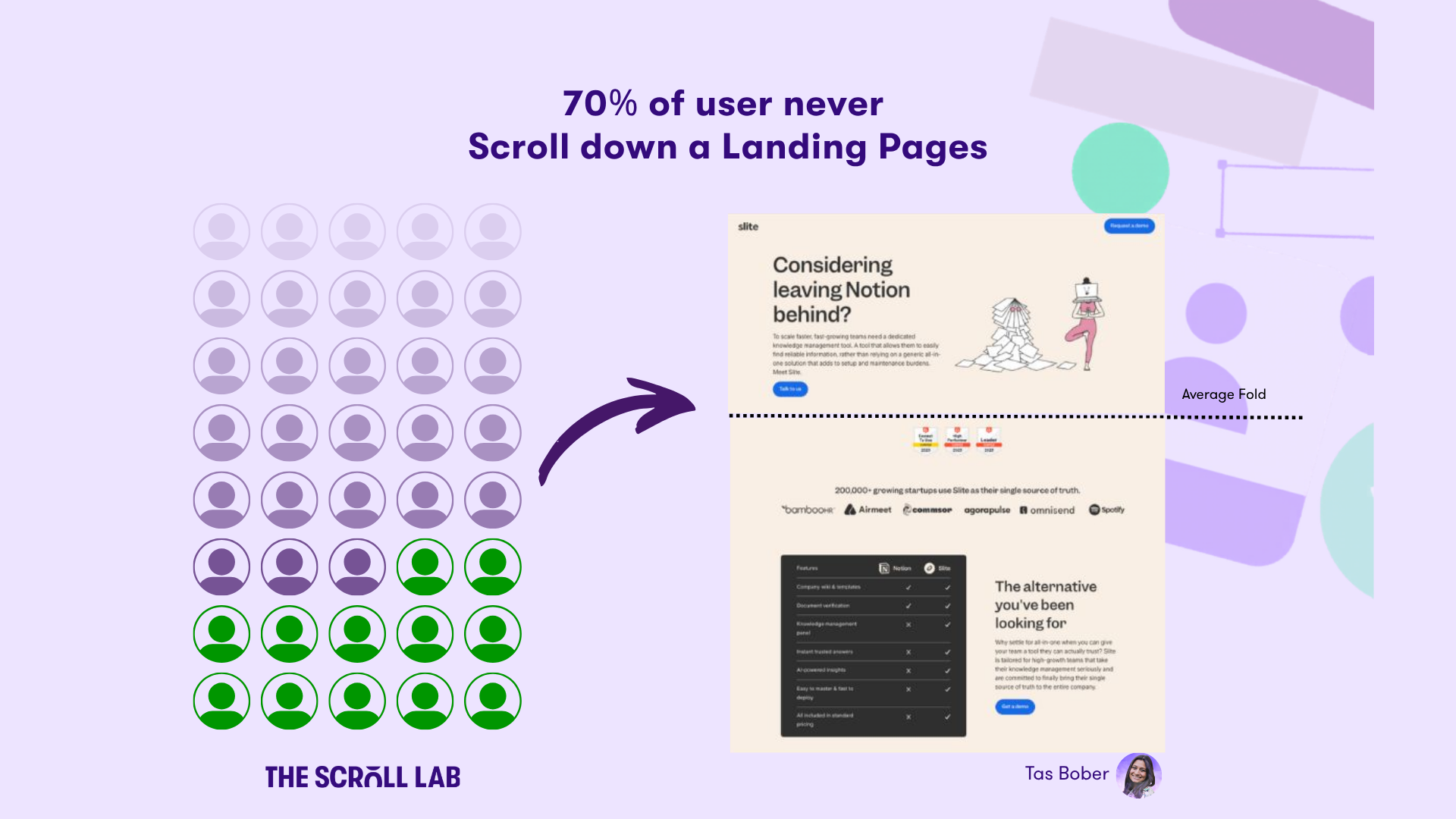
Key Takeaways:
- Most users never make it past the fold, and the problem usually isn't the offer or the CTA. It's a page that doesn't give buyers a reason to keep scrolling.
- Every section of a landing page has one job: get the buyer to the next section. Shifting from "convert at every step" to "earn the scroll" is what separates high-engagement pages from ones that quietly underperform.
- Landing pages aren't a set-it-and-forget-it asset. Continuous improvement using real data. Scroll depth, drop-off points, click tracking is what turns a page with traffic into a page with leads.
Did you know most people never scroll on your landing page? They might give the page a few seconds and look at what’s above the fold, but they never make it to the bulk of your messaging, layout, design, and clever copy.
So, why does it matter, you’re getting people to your landing page after all?
Truthfully, traffic is only good if it leads to conversions. You can’t afford to waste ad spend sending traffic to pages that don’t convert. And what most people don’t realize is that when users drop off before they engage, the problem isn’t just the CTA or the offer, it’s how your page guides the buyer’s attention.
The following sections offer a breakdown on how to adjust your pages for better engagement and conversion.
Why Most Marketers Get B2B SaaS Landing Pages Wrong
Most marketers can put together a successful landing page, but they often go wrong in their approach. The typical approach looks something like this:
- Build the landing page last
- Assume layout = done
- Launch it and forget it
- Blame the channel when results fall flat
Then, when leads don’t start rolling in, you hear, “Yeah, that campaign didn’t work.”
But the question is: Did the campaign not work, or did you never work the page?
How to Create Successful B2B SaaS Landing Pages
The major difference between an underperforming landing page with little scroll and one with high engagement is the mindset you bring to it.
Each section of the landing page is not there to convert the user. Its only job is to get them to the next section. Instead of trying to sell the prospect every step of the way, try the following structure:
→ Hook
→ Message
→ Visual proof
→ Features
→ Trust
→ FAQs
→ CTA
This process helps you earn the scroll, section by section, and improve engagement with potential buyers.
5 Additional Ways to Improve Scroll on Landing Pages
In addition to the initial approach to building, there are several ways you can improve scrolling on your current landing page. Let’s look at a few.
Use a Framework to Start
Far too often, marketers jump right into a landing page build without a proper framework. They opt for what “feels” right rather than starting with a structured layout that aligns with how B2B buyers process information.
The result? Mid-level engagement numbers at best.
As marketers, we often overcomplicate things when our goal should be to simplify the process. So, next time you start adding random sections to your landing page, stop and think if it actually adds value to the buyer.
Get Enough Volume to Evaluate
Most of the time, B2B SaaS companies don’t give their landing pages enough time to live before changing things. To make accurate adjustments, you need a baseline of traffic which means keeping the page active and edit-free for more than just a week.
It’s also important that, once you’ve reached the volume needed to start enhancing the page, you make changes based on data, not assumptions.
Using tools and metrics like heat maps, scroll depth, and click tracking can help identify opportunities for improvement.
Analyze Drop-off Points
Beyond simple metrics, another key data point to analyze is drop-off points. By reviewing your page, you can more easily identify where users disengage.
If you notice, most users aren’t making it past a mid-page infographic or are falling off after a benefits section, it could be a sign that your messaging isn’t landing, or you’ve created friction.
Reorder or Remove
After you’ve collected data on user engagement within your landing page, it’s time to start reordering and removing items. Your goal isn’t to overload buyers with information, it’s to answer their questions quickly.
So, that might mean moving the CTA further down after you’ve earned the buyer's trust. Or adjusting where the explainer section shows up on the page.
Repeat
Out of all the strategies above, the most important is to remember that your landing pages are a living part of the funnel. Too many marketers treat pages as a “set it and forget it” asset without taking the time to evaluate their performance.
All things considered, landing pages are the difference between a full pipeline of leads and just traffic to a page.
Optimized Landing Pages = Leads
Even as we dive deeper into the AI-marketing era, an optimized landing page remains one of the biggest drivers of conversions and leads. But without continuous maintenance and improvements, these pages often underperform and are forgotten.
To get the most out of your pages, you have to review and refine until buyers have a reason to keep scrolling.
FAQ:
1. Why do most users never scroll on landing pages?
Most users decide within seconds whether a page is worth their time. If the content above the fold doesn't immediately communicate value or pull them in, they leave before ever seeing the rest of your messaging.
2. What is the most effective structure for a B2B SaaS landing page?
A high-performing landing page earns the buyer's scroll, section by section, moving them from hook to message to visual proof to features to trust to FAQs to CTA, rather than trying to convert them at every step.
3. How much traffic do I need before making changes to my landing page?
You need enough volume to establish a reliable baseline before editing anything. Making changes based on a week of data or gut feel leads to decisions built on assumptions rather than patterns.
4. What metrics should I track to improve landing page performance?
Heat maps, scroll depth, and click tracking are the most useful tools for understanding where buyers engage and where they drop off, giving you a data-driven foundation for improvements.
5. How often should I update my landing page?
Landing pages should be treated as a living part of your funnel, not a finished asset. Regular review cycles based on performance data - not arbitrary timelines - are what keep pages converting over time.